Heat Exchange Equipment
Dismounted plate heat exchangers and heating substations for every heat transfer scenario
Our Product Lines
Two complementary heat exchange product lines from our partner factory Sanming
Not sure which equipment fits your project? Contact our engineers for a free consultation →
How Heat Exchange Equipment Works
Efficient heat transfer between two circuits that never mix
Plate Heat Exchanger Principle
A plate heat exchanger channels two fluids through alternating corrugated plates. The corrugation creates turbulence at low flow velocities, which boosts heat transfer coefficients and keeps fouling low. Because the two media flow in counter-current, the temperature approach between hot and cold sides can be as small as 1°C — heat is extracted from the hot source down to nearly the temperature of the returning cold medium.
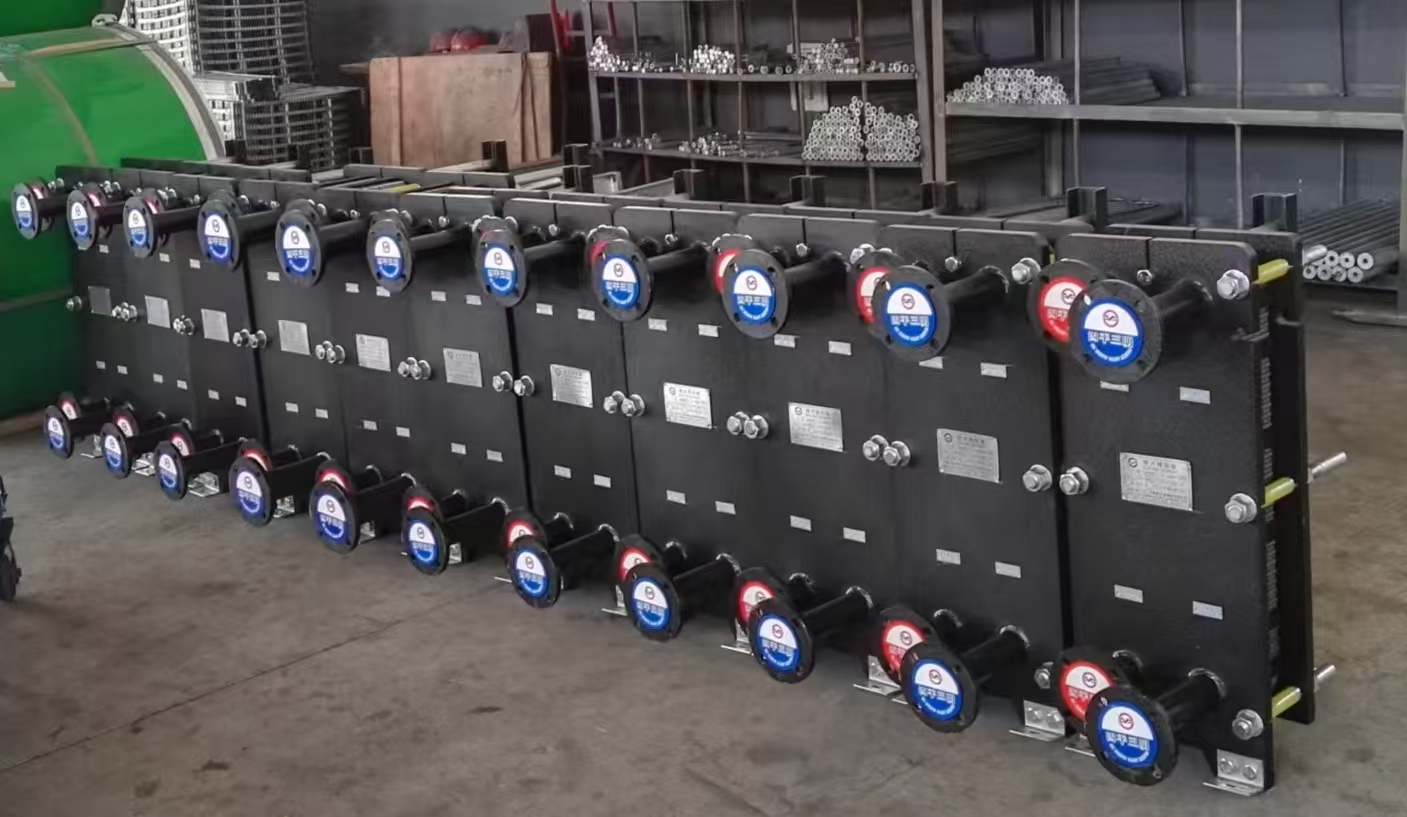
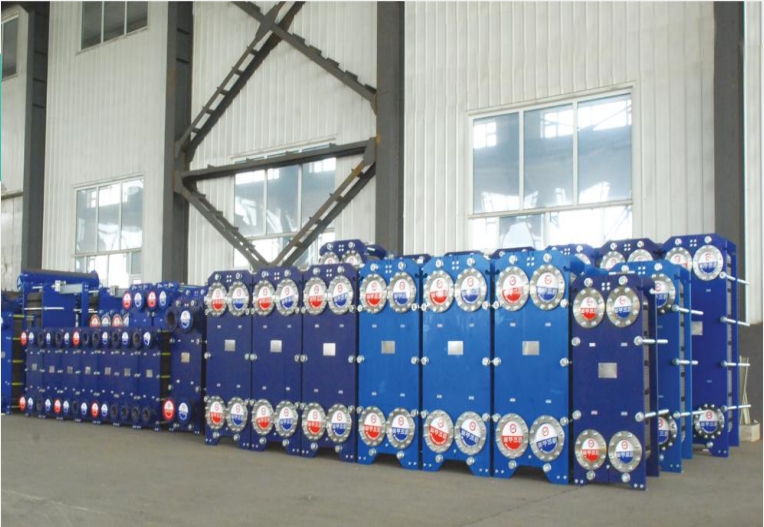
The SM series is a dismounted (gasketed) design: the plate pack is held between frame plates by tie bolts. Loosen the bolts, slide the frame back, and every plate is accessible for mechanical cleaning or replacement. Capacity changes are handled simply by adding or removing plates — no welding, no replacement of the whole unit.
Where Substations Fit In
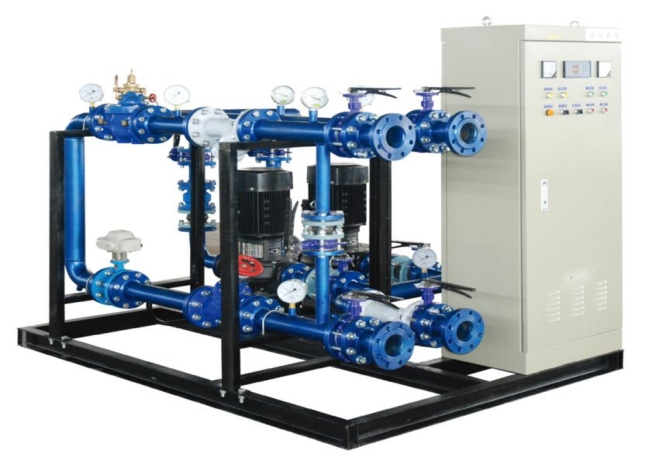
A heating substation is the interface between a district heating network and a building's own heating circuit. It combines plate heat exchangers, circulation pumps, control valves, and instrumentation on a single skid, delivering network heat to radiators, underfloor heating, and domestic hot water at the temperatures and pressures the building needs.
In an individual substation, the plate heat exchanger hydraulically separates the building from the network — protecting both sides. In a direct connection substation, water from the network circulates directly through the building system, cutting equipment cost where network conditions allow. Both types are configured per project, and both are manufactured by Sanming Heat Exchange Equipment Co., Ltd., Belitto's heat exchange partner factory.
Product Gallery
Plate heat exchangers and heating substations
Certifications & Compliance
Certified manufacturing, documented materials, tested before shipment.
Quality Management
Produced in ISO 9001-certified manufacturing facilities.
Material Certification
Heat transfer plates in 304/316L stainless steel, supplied with mill certificates on request.
Pressure & Leak Testing
Every unit is pressure-tested and ships with a factory test report.
Belitto equipment is engineered to Belitto specifications and manufactured by audited partners. Certificate copies and material documentation are provided per shipment or project on request.
Service & Applications
Comprehensive support for every heat exchange project
Free Consulting
Project-based configuration of plate packs and substation skids to match your network parameters.
Installation Support
Commissioning guidance for skid installation, control setup, and system balancing.
Genuine Spares
Original plates and gaskets from the partner factory, with responsive after-sales support.
Warranty Coverage
12 months from commissioning or 18 months from delivery, whichever comes first — applies to the complete unit and to all components alike.
Wide Application Scenarios: District heating networks, residential communities, commercial HVAC, food and beverage processing, steel and metallurgical plants.
Contact Us for Your Project